There’s a story behind the address. Start with the evidence.
A practical way to research the history of a Beverly Grove-area home using Los Angeles Public Library directories, photographs and maps, without turning clues into claims.
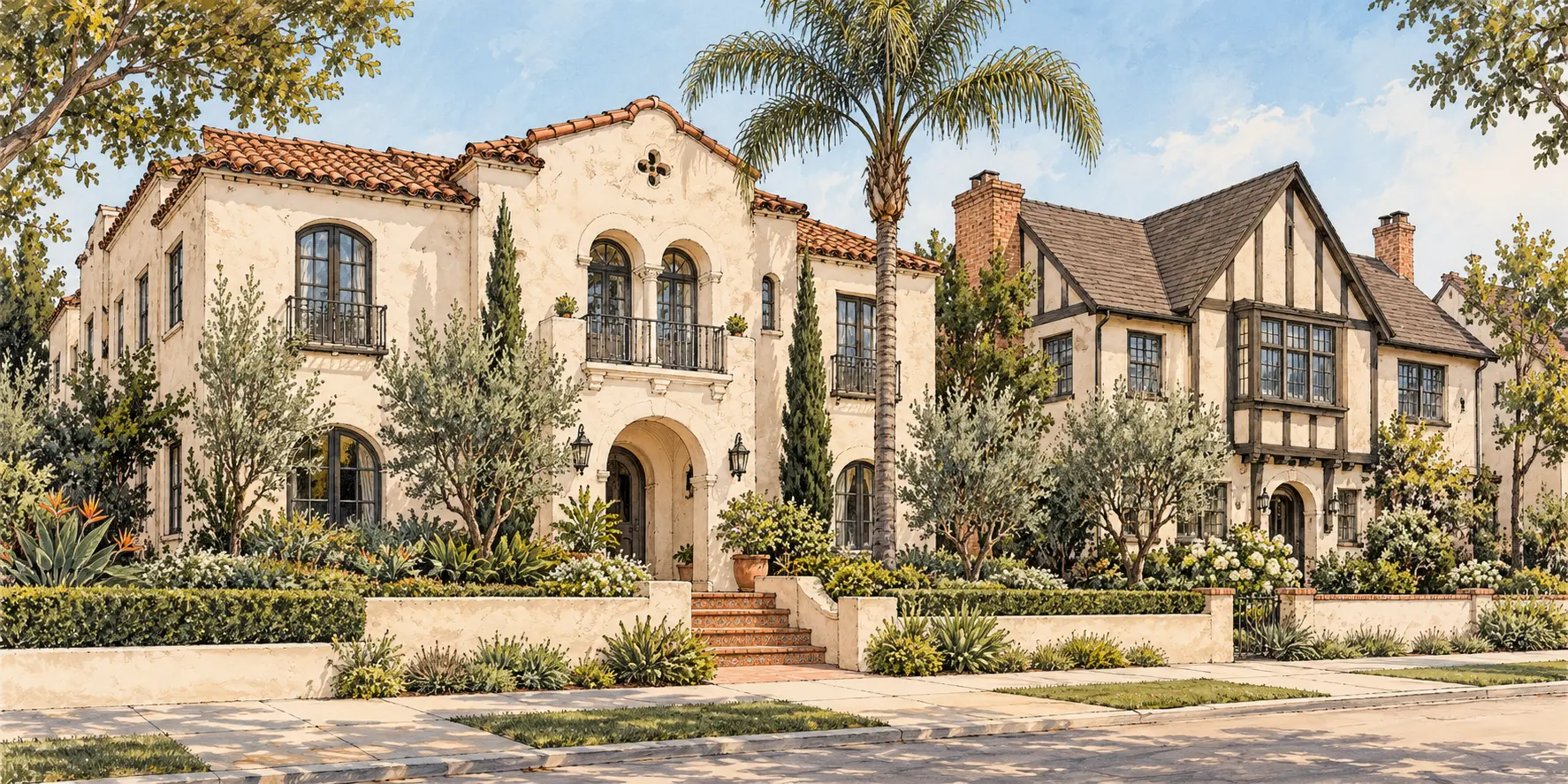
An old photograph can change the way you notice a street. A familiar corner may have a different storefront, a garden may be much smaller, or a building you walk past every day may appear in the background. For owners and buyers around Beverly Grove, that kind of discovery can make a home feel connected to a larger place.
But a compelling story and a documented history are not the same thing. Before repeating an architect’s name or describing a former resident, build a small research file. Los Angeles Public Library offers several useful starting points. None promises a complete account of your address.
Give the search one question
Start with something answerable: What did this block look like in a particular decade? Does a directory mention this address? Is there an older image of the nearby intersection? These are better opening questions than asking for everything that has ever happened in a house.
Write down the address exactly, including directional prefixes and any unit number, then keep a separate list of search variations to try. That list is a working aid, not evidence that an address changed. If a variation produces a result, compare it with the record before deciding it describes the same place.
Know which directory you are opening
LAPL’s City Directories Index describes paper and microform holdings in its History & Genealogy Department. A catalog entry is therefore not necessarily a digitized directory you can read immediately. Note the city, year and format before planning a visit or further search.
The library’s History of Your House guide also points to selected digitized Los Angeles directories and address-based searching. Treat a directory match as a dated lead. A name appearing beside an address does not, on its own, establish ownership, an architect’s involvement or how long someone stayed.
Let photographs widen the view
TESSA’s collection hub brings together the library’s Photo Collection, maps, city and street directories, and other historical material. Try the street or nearby intersection as well as the full address. A useful image may tell you more about the surroundings than the house itself.
LAPL cautions that its photographs may show the neighborhood and only rarely the particular house. Keep that distinction in your notes. Read the caption, date and identifying information before connecting an image to a property. If the caption is approximate or the address is uncertain, preserve that uncertainty rather than filling the gap with a confident description.
Use a map as a question, not a verdict
The History & Genealogy Department describes Sanborn atlases as records originally created for fire-insurance purposes that show changes from block to block. They can help frame questions about an earlier street or building arrangement.
Record which edition or sheet you consulted. An old map is not a current survey, a permit approval or a determination of what can be built today. If historical research raises a question about construction or alterations, move that question into a separate investigation. Our property-records guide addresses that different task.
Make a source card for each discovery
For every promising item, save its link or catalog reference, title, date as stated, and a short note about what it actually shows. Separate those observations from your interpretation. “The caption identifies this intersection” is a different statement from “this must be our building.”
Then list the next check. It might be another year’s directory, a clearer photograph or a question for a librarian. If you cannot resolve a discrepancy, leave it open. An honest gap is more useful than a polished story that later needs to be undone.
Ask for direction before sharing the result
The department lists history@lapl.org and 213-228-7400 for reference help. Send a focused question with the records already consulted, rather than assuming staff can undertake an entire house history. Confirm access arrangements before making a trip to Central Library, which is downtown, not the Fairfax Branch.
Separate a research copy from a publishing request
Before putting an archival image in a listing, brochure or public post, follow the library’s collection-specific instructions. The Photo Collection ordering page calls for prior written permission for publication and other reuse. It asks researchers to record each image’s Order Number, submit the photo order form to photos@lapl.org and return the library’s release form before processing. Reproduction and use fees are separate questions; confirm the charges and intended use with staff rather than treating a downloaded preview as the finished publishing file.
For non-photographic material, such as an item from another TESSA collection, use the separate Special Collections reproduction instructions. That page expressly says its form is not for Photo Collection requests. Approval can depend on copyright, restrictions, physical condition and staff resources. Ask which route applies to your specific item instead of assuming one permission covers an entire folder of discoveries.
Keep the item identifier, proposed medium, intended use, written response and required credit together. The two pages prescribe different credit formats, so copy the applicable approved wording into the project brief. These are preparation suggestions, not a determination of copyright status or permission for a particular image. Confirm arrangements before scheduling a print run or public post. A careful home story documents both the claim being made and the material used to illustrate it.
Go to the source
- LAPL: History of Your House research guide ↗
- LAPL: City Directories Index and physical-format holdings ↗
- LAPL TESSA: digital collection categories ↗
- LAPL: History & Genealogy Department, maps, photo resources and contact ↗
- LAPL TESSA: Photo Collection ordering, permission, release and credit instructions ↗
- LAPL TESSA: separate non-photographic Special Collections reproduction route ↗
Six official Los Angeles Public Library pages directly checked November 22, 2026. Originally published November 14; materially updated November 22 with collection-specific reproduction, permission and credit planning. The Photo Collection ordering page labels its fee schedule and revised form effective February 26, 2020; other linked pages display no publication dates. This is existing guidance, not a new archive or rule announcement. Access, fees, permissions and production timing must be confirmed with the library; no image order, payment or permission request was submitted.
General historical-research guidance, not a title search, permit or structural assessment, historic-designation determination, appraisal or legal advice. Confirm property-specific claims and permissions with the appropriate records, authorities and qualified professionals. Our editorial policy.
A property question?
Michael and Gabriel can help you organize the real estate questions and identify the next conversations to have.
Contact Michael + Gabriel →