What makes a home feel modern? A LACMA design detour.
Two nearby LACMA exhibitions offer a thoughtful way to separate the promise of modern living from the daily work of using a home.
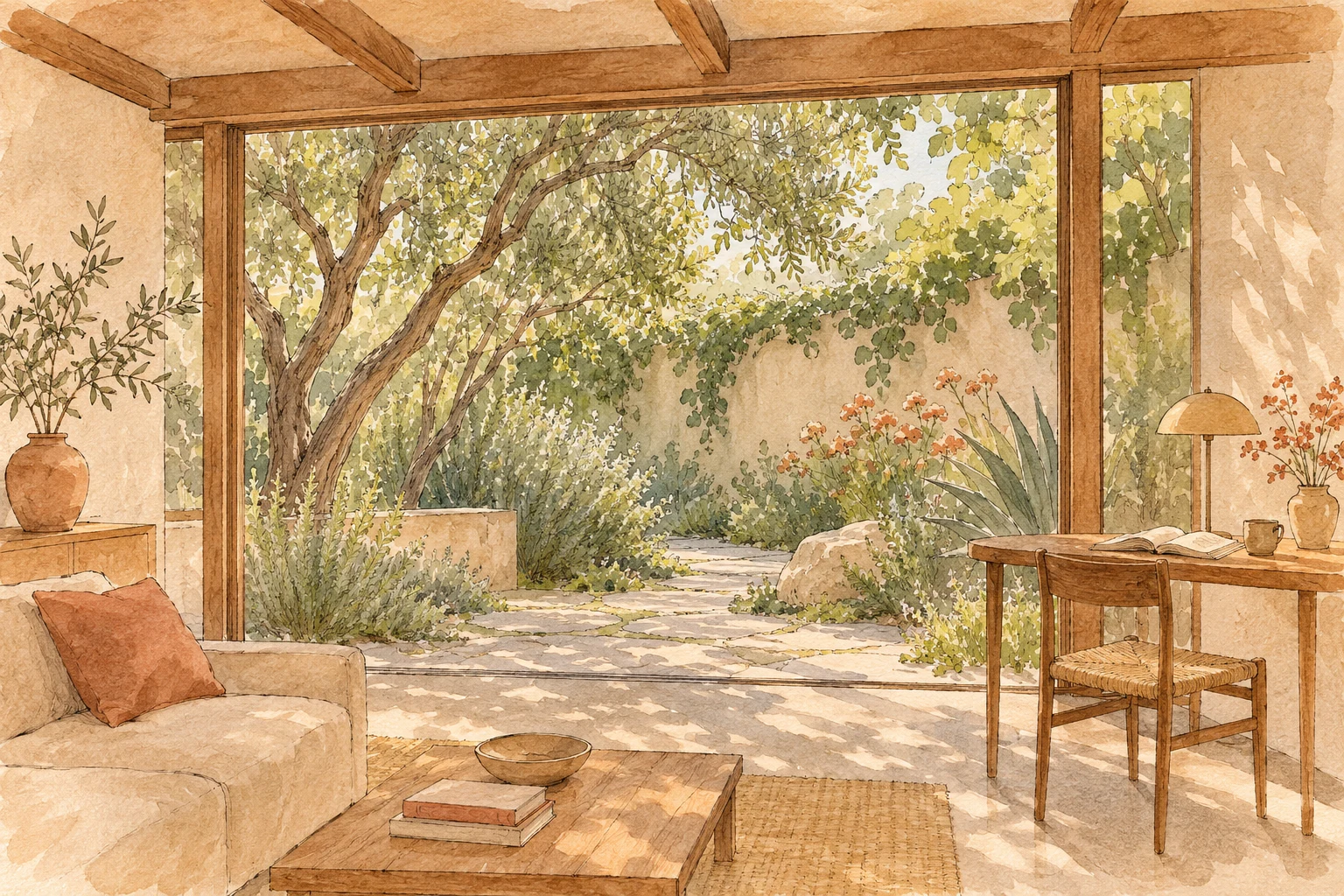
A home can look futuristic and still make an ordinary morning awkward. Before choosing a renovation direction or comparing two properties, it is worth separating the image of modern living from the routines a room actually needs to support. Two exhibitions nearby at LACMA make that distinction an unusually interesting subject for a museum visit.
Home of the Future, 1925–1985: Designing Domestic Utopias and The Kitchen and Its Discontents are both scheduled in the Resnick Pavilion from September 27, 2026 through March 14, 2027. They are ongoing exhibitions, not newly announced openings. For Beverly Grove readers, this is a nearby design outing on Wilshire, south of Beverly Boulevard, with questions that can travel home afterward.
The promise is part of the design
LACMA describes Home of the Future as a study of American domestic visions across six decades. Models, drawings, photographs, films and household objects trace how tomorrow’s home was promoted. The examples in the museum’s overview include self-cleaning kitchens, rapidly assembled plastic houses, push-button appliances and desktop computers. Its September 1 preview also frames the show around whose future was being imagined and who was left outside it.
A useful way to approach that history is to ask what each proposal promises to remove: effort, delay, clutter, isolation or dependence on someone else. Then ask what it might require in exchange. Our question for a present-day home is not whether technology belongs there. It is whether the benefit is clear enough to describe without using the words “smart,” “luxury” or “state of the art.”
A kitchen is more than its appliances
The companion exhibition gives that broad question a specific room. LACMA brings together Margarete Schütte-Lihotzky’s 1926–30 kitchen for New Frankfurt’s social housing program and Charlotte Perriand and Le Corbusier’s 1948–50 kitchen for Marseille’s L’Unité d’Habitation. The museum describes the designers’ interest in efficiency and modularity, while also examining domestic labor and the tensions between an orderly ideal and everyday life.
That is a helpful prompt for someone planning a kitchen, without treating either historic example as a template to copy. Picture unpacking groceries, preparing a meal and clearing away afterward. Where does each task begin? What needs to stay within reach? Can another person pass through without interrupting the work? A beautifully composed photograph answers different questions from a sequence of ordinary movements.
Take a brief home, not a shopping list
Afterward, try writing three short notes about your own household. First, identify one routine that already works and should survive any redesign. Second, name a recurring frustration in plain language, such as nowhere to put a bag when arriving home. Third, distinguish a preference from a requirement. Wanting a particular finish is different from needing a place to sit while preparing food.
For buyers, those notes can become a consistent set of questions to bring to different homes. For owners, they can help explain a project to a designer before the conversation narrows to products. They are observation prompts, not a way to determine whether a wall can move, a system is adequate or a project will be approved. Our property-records guide addresses a separate part of that preparation.
The same distinction applies when describing a home for sale. An attractive feature is easier to understand when its everyday purpose is explained clearly. That does not establish a financial return, prove that a device works or replace a buyer’s own evaluation. Design history can sharpen the questions; it cannot answer the property-specific ones.
Plan the visit separately from the inspiration
Use LACMA’s current visitor page for hours and admission arrangements before heading out. The museum recommends advance timed-entry tickets and warns that walk-up timeslots may sell out. A published exhibition run does not guarantee a particular day’s access.
For another local perspective on how domestic arrangements shape architecture, our Schindler House guide considers shared living and the relationship between rooms and gardens. Neither story supplies a universal ideal house. Together, they offer a better starting question: what should this home make easier for the people who will actually live in it?
Go to the source
- LACMA: Home of the Future exhibition and dates ↗
- LACMA: The Kitchen and Its Discontents ↗
- LACMA Unframed: September 1, 2026 exhibition preview ↗
- LACMA: current visitor and ticket guidance ↗
All four linked official LACMA pages checked November 20, 2026. The Unframed preview was published September 1, 2026; the exhibition and visitor pages display no publication dates. Both exhibitions began September 27, 2026 and are scheduled through March 14, 2027. This is a current cultural guide, not a new-opening announcement or a firsthand review. The home-planning questions are our editorial synthesis, not museum recommendations.
Confirm current hours, admission arrangements and exhibition availability with LACMA. This article is design context, not a property inspection, renovation plan, product endorsement or claim about resale value. Consult qualified professionals about any proposed work. Our editorial policy.
A property question?
Michael and Gabriel can help you organize the real estate questions and identify the next conversations to have.
Contact Michael + Gabriel →